Policy & Ecosystem

What Nitin Gadkari's Letter to Lemon Ideas Founders Tells Us About Viksit Bharat 2047

Union Minister Nitin Gadkari sent a formal letter of appreciation to the startups of Lemon Ideas Innopreneurs Season 12. We were on that list. Here is what the letter actually means — for India's startup policy, for tier-2 cities, and for every founder building in a country that is paying attention.

Archit Dhir

Apr 16, 2026 · 11 min read

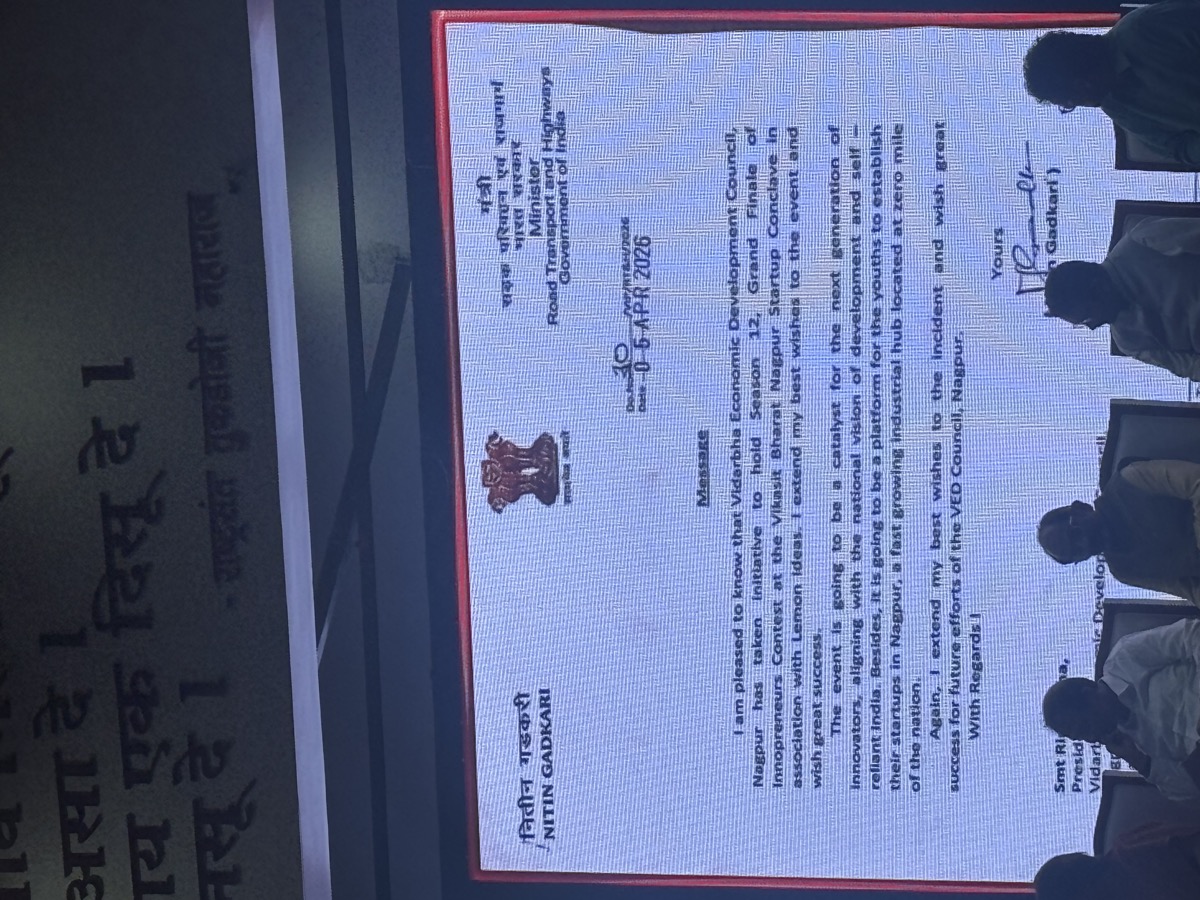
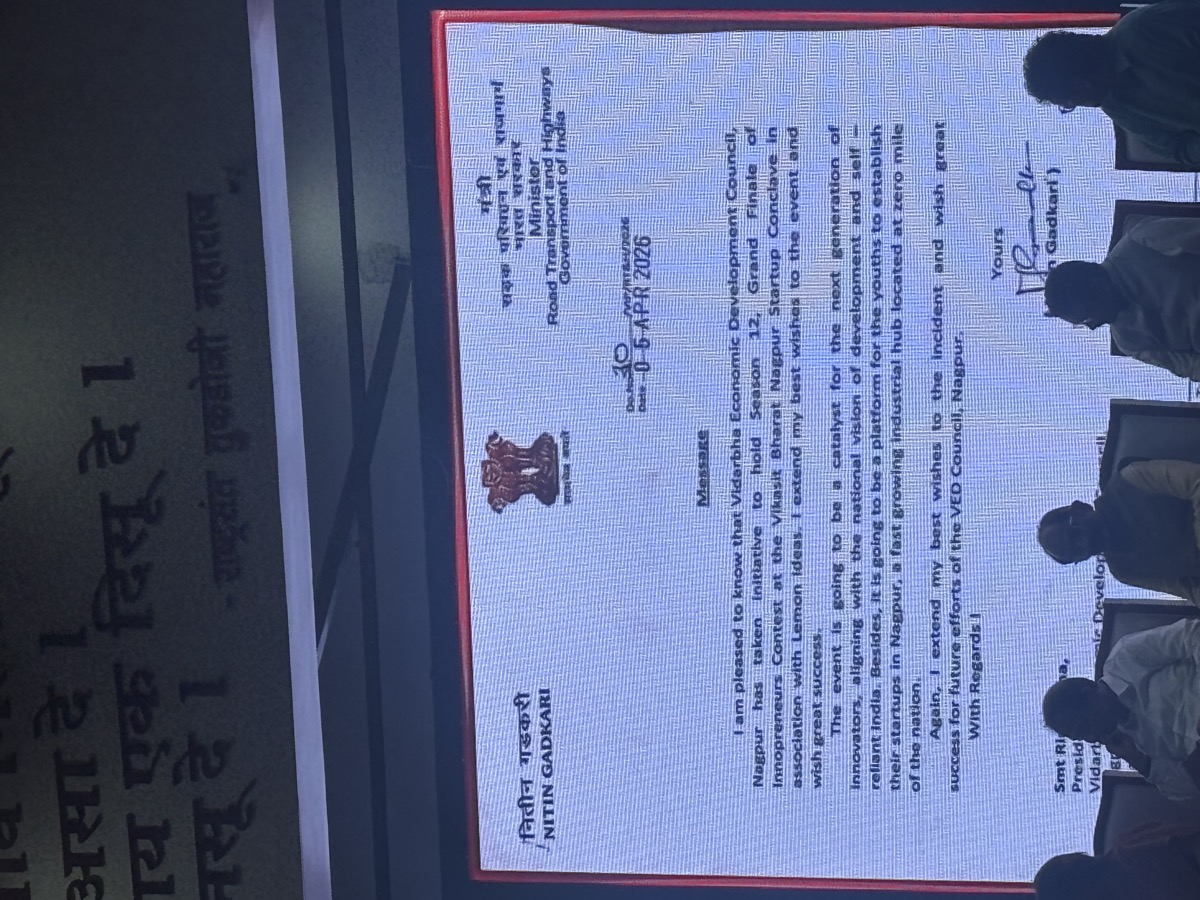
Letter from Union Minister Nitin Gadkari appreciating Lemon Ideas Innopreneurs Season 12 startups

The letter from Union Minister Nitin Gadkari — appreciating Lemon Ideas Innopreneurs Season 12 startups, including Nimitai

Nitin Gadkari doesn't send congratulatory letters often.

The Union Minister of Road Transport and Highways — one of India's most respected political leaders, a man from Nagpur who has built more of India's physical infrastructure than anyone alive — took the time to write a letter appreciating the startups of Lemon Ideas Innopreneurs Season 12.

We were on that list. Here is what his letter actually means.

Quick Answer

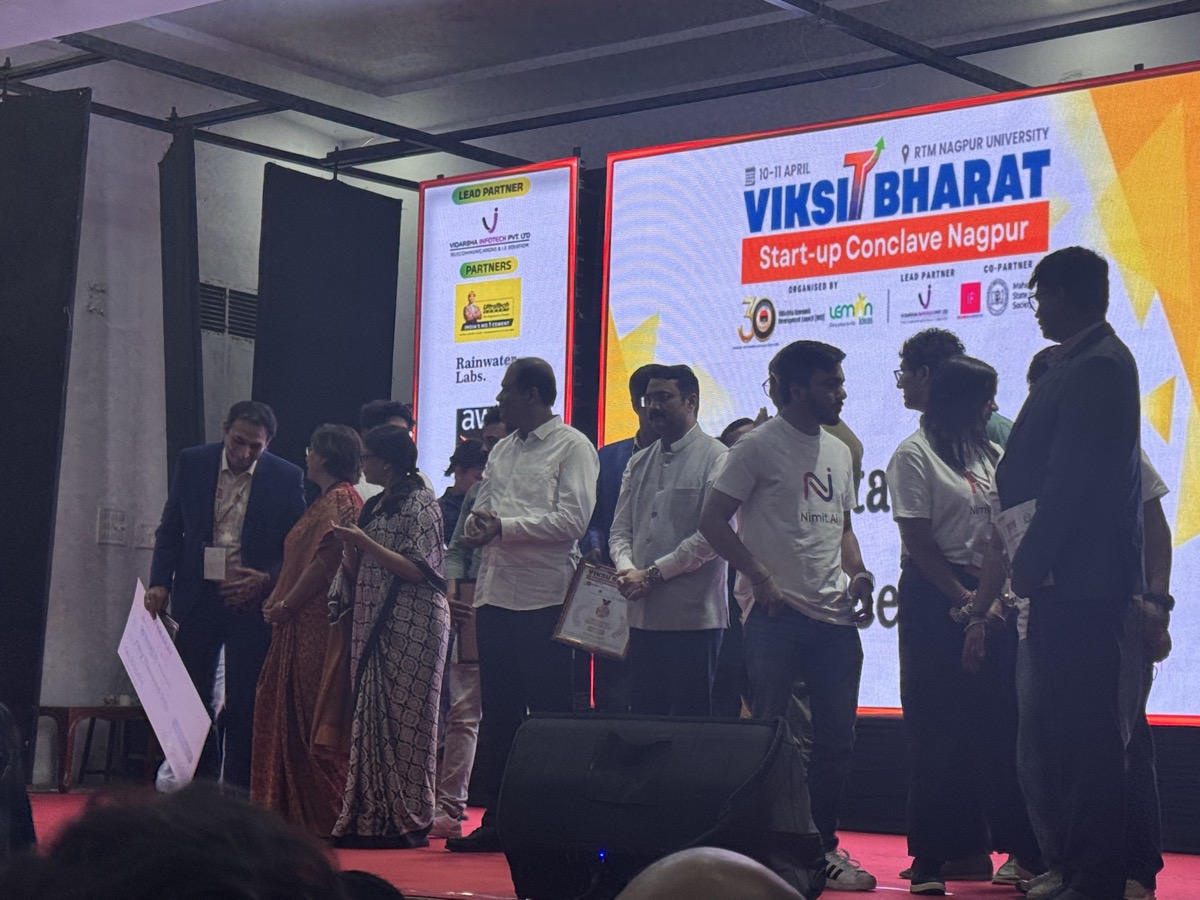
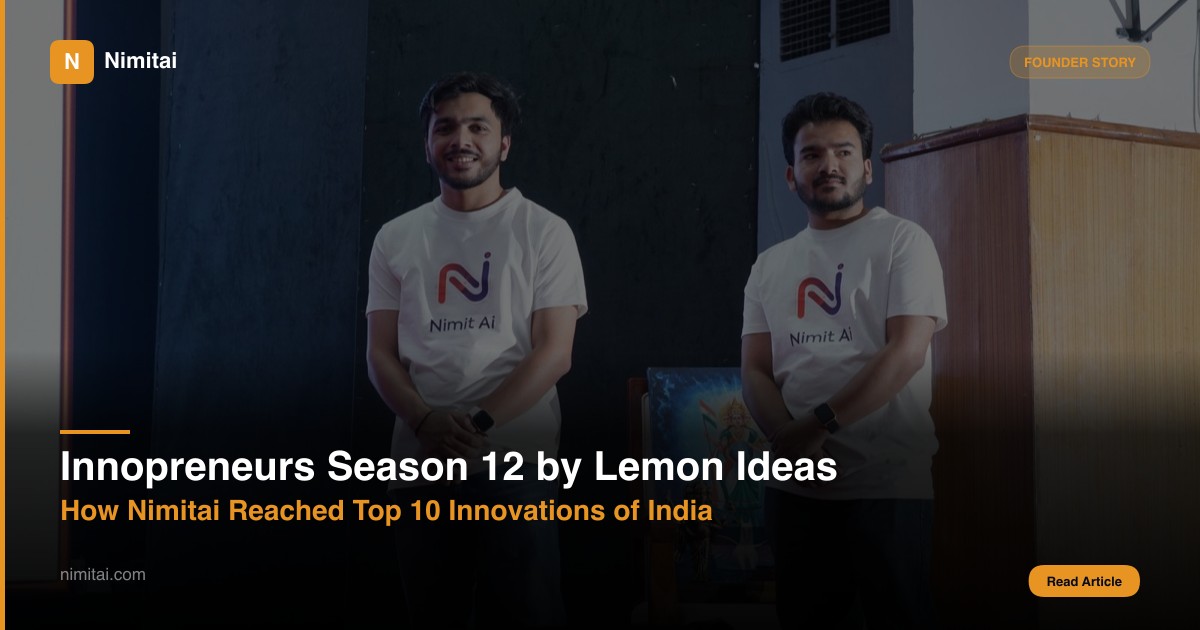
Union Minister Nitin Gadkari formally appreciated the startups of Lemon Ideas Innopreneurs Season 12 — the program held at RTMNU Nagpur as part of the Viksit Bharat Conclave in April 2026. His letter named the program, invoked the Viksit Bharat 2047 vision, and called out the role of startup founders in India's centenary developmental goals. Nimitai, a B2B SaaS conversation intelligence tool, was named in India's Top 10 Innovations at the event — with Maharashtra Education Minister Pankaj Bhoyar personally facilitating the recognition.

Key Takeaways

  • A Union Minister's formal letter to a startup cohort is not symbolic — it is a policy signal that government is tracking accelerator pipelines, not just FDI
  • Viksit Bharat 2047 is India's most consequential economic policy framework; its explicit inclusion of startup founders changes the conversation about who builds India
  • Nagpur is emerging as a legitimate tier-2 innovation hub, backed by political will, 103-year institutional infrastructure, and the VED Council ecosystem
  • Nimitai was named in India's Top 10 Innovations at Innopreneurs Season 12 — a recognition that connects B2B SaaS to India's national development narrative
Analysis

Who Is Nitin Gadkari, and Why This Letter Matters

To understand why Gadkari's letter is significant, you need to understand who Gadkari actually is — and what he has built.

Nitin Gadkari is the Union Minister of Road Transport and Highways, Government of India. He has held this portfolio since 2014, making him one of the longest-serving ministers in the Modi government. His constituency is Nagpur, Maharashtra — the city where Innopreneurs Season 12 was held.

But Gadkari's significance isn't primarily political. It is infrastructural. Under his tenure, India's national highway network has expanded from approximately 91,000 km to over 1,46,000 km. He oversaw the construction of the Delhi-Mumbai Industrial Corridor, the Samruddhi Expressway (which connects Nagpur to Mumbai in 8 hours instead of 14), and has been the most vocal advocate for electric vehicles in Indian government. He built the physical scaffolding on which a Viksit Bharat could stand.

He is also known for being unusually hands-on with industry and entrepreneurship — particularly MSMEs. He has publicly argued that India's economic future runs through small businesses, not just large corporations. He has said — repeatedly — that the government must reduce compliance burden, facilitate credit, and enable innovation at the ground level. His rhetoric has consistently matched his policy positions: where he talks, he has generally built.

By the numbers: Gadkari's infrastructure record

  • 1,46,000+ km — National Highway network under his tenure (up from 91,000 km)
  • Rs 6 lakh crore+ — Value of road projects completed or underway as of 2026
  • Samruddhi Expressway — 701 km; connects Nagpur to Mumbai; reduced travel time by nearly 40%
  • MIHAN, Nagpur — Multi-modal International Hub Airport and Hub championed by Gadkari for Vidarbha region

When a man with this track record writes a letter to a startup cohort, it is not a form letter. It is a considered act of recognition that carries the weight of his office and his personal credibility as a builder.

What the Letter Says

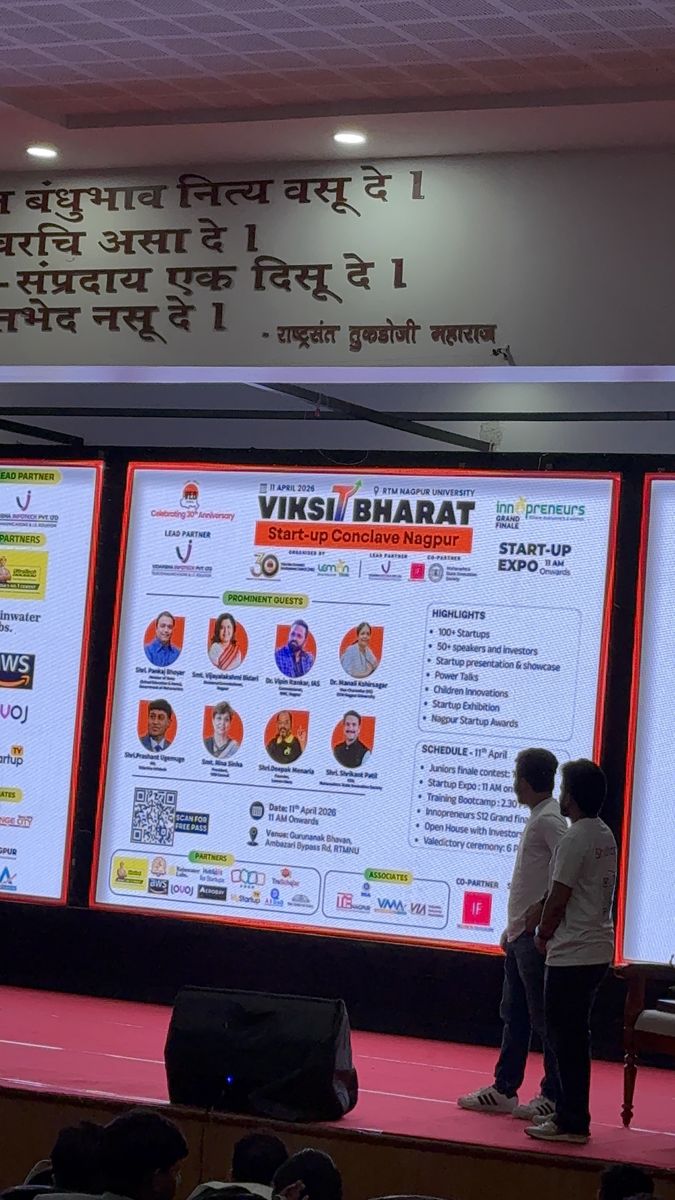
The letter from Union Minister Gadkari was addressed to the founders participating in Lemon Ideas Innopreneurs Season 12, the startup cohort program held at Rashtrasant Tukadoji Maharaj Nagpur University (RTMNU) as part of the Viksit Bharat Conclave in April 2026.

A few things stand out about what the letter does and does not do.

It is not a generic congratulatory note. Gadkari named the Lemon Ideas program specifically. He named Viksit Bharat. He called out the role of startup founders in India's 2047 developmental goals. The letter positions the Innopreneurs cohort not as a regional startup event but as a contribution to a national mission — and it frames the founders who participated as actors in India's centenary vision, not merely entrepreneurs pursuing individual opportunity.

"
This is not a generic form letter. Gadkari named the Lemon Ideas program. He named Viksit Bharat. He called out the role of startup founders in India's 2047 developmental goals.

The framing matters. When a Union Minister connects a Nagpur-based accelerator cohort to a national policy vision in official correspondence, that correspondence becomes part of the institutional record. It signals to bureaucrats, investors, journalists, and other startups that this program and its participants have been recognized at the highest levels of government. That recognition carries downstream weight.

It also carries an implicit challenge: founders who have been acknowledged as contributors to Viksit Bharat are now accountable to that designation. The bar is raised, and so is the visibility.

Viksit Bharat 2047: The Vision in Plain English

"Viksit Bharat" translates literally as "Developed India." The initiative, formally launched by the Government of India, sets a goal of transforming India into a fully developed nation by 2047 — the centenary of independence from British rule.

The ambition is specific and large. India's current GDP stands at approximately $3.5 trillion. To qualify as a developed economy by standard metrics — per capita income, human development index, institutional quality — India would need to reach somewhere between $25–35 trillion by 2047. That is roughly a 10x expansion of the economy in 21 years. No country has done this at India's scale.

The government's framework for achieving this involves five pillars: infrastructure, innovation, inclusion, investment, and institutional quality. Startups and technology explicitly feature under the innovation pillar — the government has stated that innovation-led sectors need to contribute a disproportionate share of GDP growth to hit the 2047 target. Startup India, PLI schemes, and programs like Innopreneurs are part of the policy apparatus designed to activate this pillar.

🏗

Infrastructure

Rs 11.1 lakh crore in capital expenditure in the Union Budget 2024–25, focused on roads, rail, ports, and digital connectivity.

💡

Innovation

Startup India, PLI schemes, Innopreneurs-style accelerators — government's explicit recognition that innovation-led sectors must carry outsized GDP weight.

🤝

Inclusion

Tier-2 and tier-3 city development as economic strategy — not charity. Nagpur, Indore, Pune, Coimbatore as startup hubs, not just Mumbai and Bangalore.

🏛

Institutional Quality

Reducing compliance burden, accelerating credit access for MSMEs, building regulatory frameworks that support rather than throttle innovation.

What makes Innopreneurs Season 12 significant in this context is the deliberate framing of the Conclave as a Viksit Bharat event. This was not retrospective labeling — the event was organized as part of the Viksit Bharat policy ecosystem, held at a central Indian university, backed by the VED Council, and received formal appreciation from a Union Minister who is himself a Viksit Bharat architect. The alignment was intentional and institutional.

Why Nagpur, Why RTMNU, Why Now

None of the institutions involved in Innopreneurs Season 12 are accidental. The choice of Nagpur, RTMNU, and VED Council as the anchor for this conclave reflects a specific and increasingly coherent thesis about where India's next wave of innovation will come from.

Nagpur as a tier-2 innovation hub

Nagpur is often called India's "Zero Mile City" — the geographic center of the country. What that statistic obscures is the economic transformation that has been underway here for the past decade. The Samruddhi Expressway connects it to Mumbai's financial infrastructure. MIHAN — the Multi-modal International Hub Airport and Hub — makes it a viable logistics and aerospace center. The Nagpur Metro has changed the urban commute equation. And the city has, quietly, become one of India's more interesting mid-sized startup environments.

The conventional narrative about Indian tech innovation is Bangalore-Mumbai-Hyderabad-Delhi, with Pune as an honorable mention. Nagpur does not fit neatly into that story. And yet: RTMNU runs a significant technology program, VED Council has a serious network of industrialists and family offices, and the city has produced meaningful businesses across sectors. Innopreneurs is, in part, an attempt to put Nagpur on the innovation map — and Gadkari's letter is a data point suggesting it is working.

RTMNU: 103 years of institutional weight

Rashtrasant Tukadoji Maharaj Nagpur University was established in 1923. At 103 years old, it is one of India's older universities, with a student population that runs into hundreds of thousands across affiliated institutions. It has faculty depth in engineering, science, and commerce that rivals more famous metropolitan institutions — without the brand premium that comes with IIT or IIM affiliations.

Using RTMNU as the venue for the Viksit Bharat Conclave was a deliberate choice. It signals that the Viksit Bharat framework is not merely about elite institutions in metros but about activating the full depth of India's academic infrastructure — the 900+ universities outside the tier-1 system that train the vast majority of India's talent.

The VED Council and the industrial-academic-entrepreneurial triangle

The Vidarbha Economic Development Council has existed for decades as a business advocacy body for the Vidarbha region of Maharashtra. It represents industrialists, MSMEs, and professionals across Nagpur, Amravati, Wardha, Yavatmal, and surrounding districts. Its involvement in Innopreneurs Season 12 — through members like Vilas Kale, Past President of VED Council — created an unusual alignment: academic credibility from RTMNU, startup pipeline from Lemon Ideas, industrial mentorship and network from VED Council, and now political recognition from Gadkari.

This triangulation — academic + political + entrepreneurial — is genuinely rare in the Indian startup ecosystem. Most accelerator programs operate on one axis. Innopreneurs Season 12 operated on all three simultaneously. That structural fact is why the Gadkari letter carries the weight it does.

What This Means for Every Indian Founder

The implications of Gadkari's letter extend well beyond Nimitai or even the Innopreneurs cohort. There are three signals here worth reading carefully.

The policy signal: government is watching startup programs

For most of the past decade, India's startup policy conversation has been dominated by FDI, large venture rounds, and unicorn counts. The implicit assumption was that government engagement with startups happened at the top of the funnel — welcoming large foreign investment, celebrating billion-dollar companies, announcing broad Startup India frameworks.

What Gadkari's letter represents is something different: a Union Minister engaging with a specific accelerator cohort at a specific city-level program. That is government attention reaching down to the ground level of the startup ecosystem — not just the headline layer. If this pattern holds, it changes the calculus for founders who previously assumed that government recognition was only available to late-stage, already-successful companies.

The infrastructure signal: Nagpur is a startup city

Gadkari has built Nagpur's physical infrastructure with his own policy record. His appreciation of an Nagpur-based startup cohort is implicit acknowledgment that the infrastructure investment has activated an entrepreneurial ecosystem. That is a signal to founders who have been building in Nagpur in relative obscurity: your city is now visible in the Viksit Bharat framework.

For founders elsewhere in tier-2 India — Indore, Coimbatore, Vadodara, Visakhapatnam — the signal is equally clear. Government policy and physical infrastructure are converging in these cities. The calculus for where to build is changing.

The validation signal: accelerators are now credentialing pipelines

Lemon Ideas is not a premier-league Indian accelerator by conventional metrics. It doesn't have the brand of IIT Incubation Centres, IIM Ventures, or T-Hub. What it has is something arguably more interesting: genuine institutional embeddedness in a specific city, a relationship with a university and an industrial council, and now formal recognition from a Union Minister.

That recognition transforms what Lemon Ideas Innopreneurs represents. It is no longer just an accelerator. It is a recognized pipeline of Viksit Bharat innovators — a designation with policy salience and potential downstream access to government programs, procurement, and funding.

For founders evaluating accelerator programs: the strongest programs in the next decade may not be the most famous ones. They may be the ones with the deepest institutional roots in specific ecosystems. Lemon Ideas' trajectory is worth studying.

The pattern to notice

Government recognition at the Union Minister level is now reaching down to city-level accelerator programs. This changes the landscape for founders building outside India's metro startup hubs. The infrastructure is in place; the political attention is following.

Our Place in This Story: Nimitai's Top 10 Recognition

I should be clear about where Nimitai fits in this story — because I am the CTO writing this post, and I want to be precise rather than promotional.

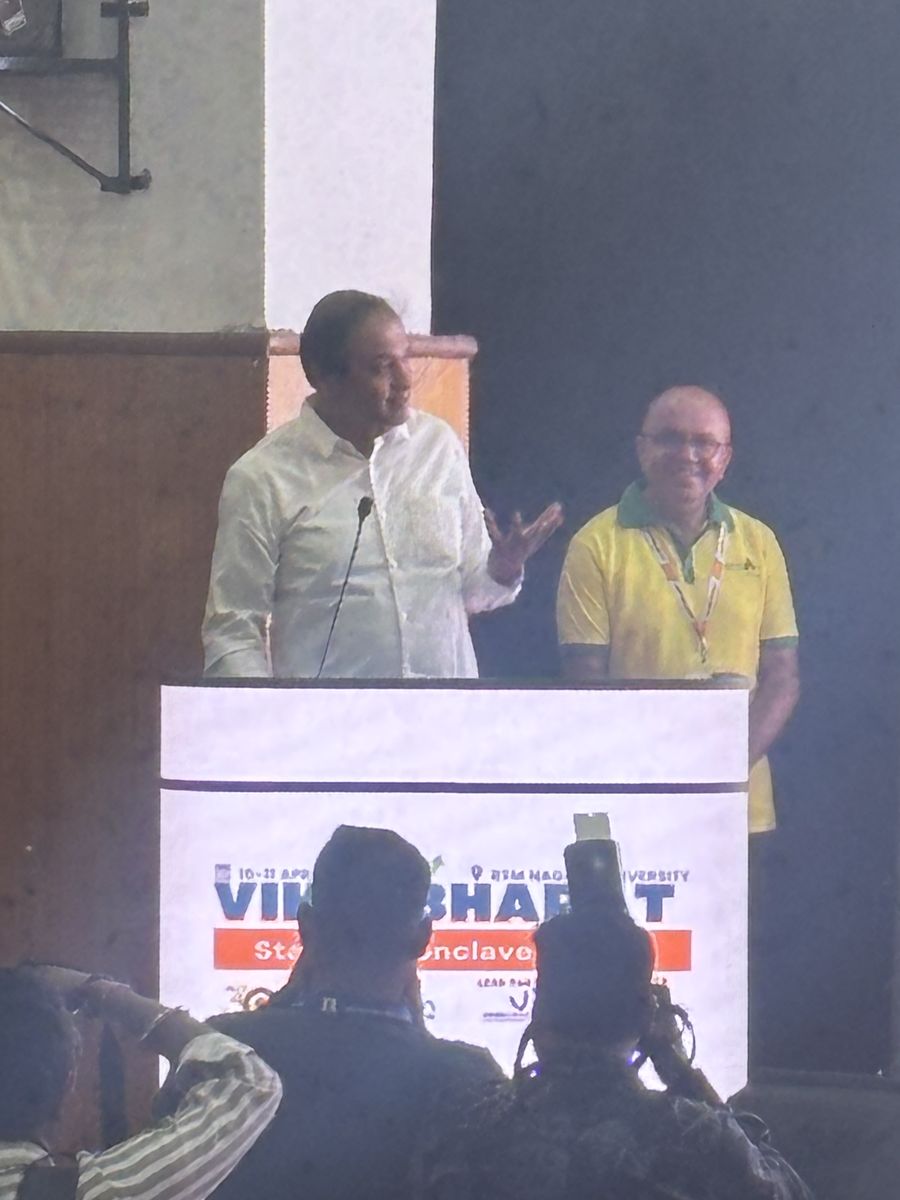
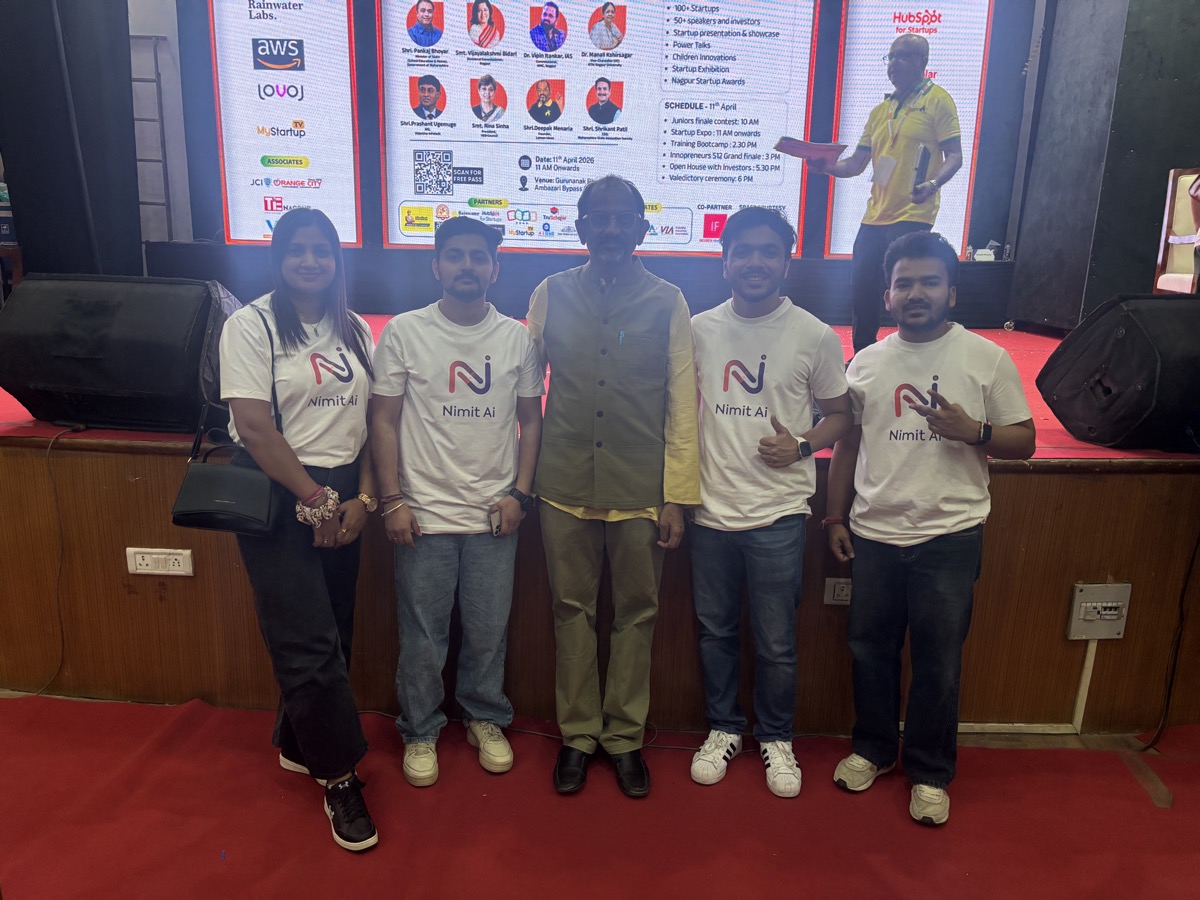
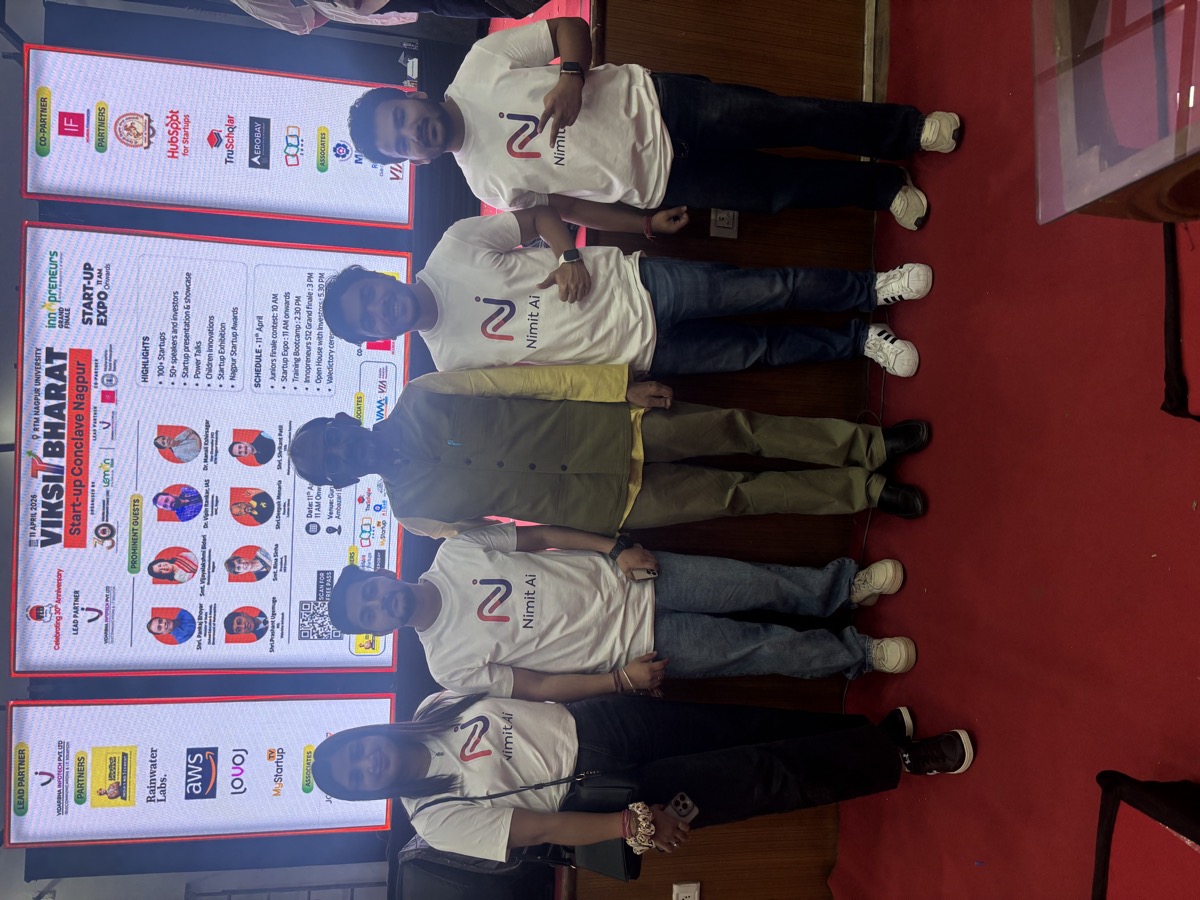
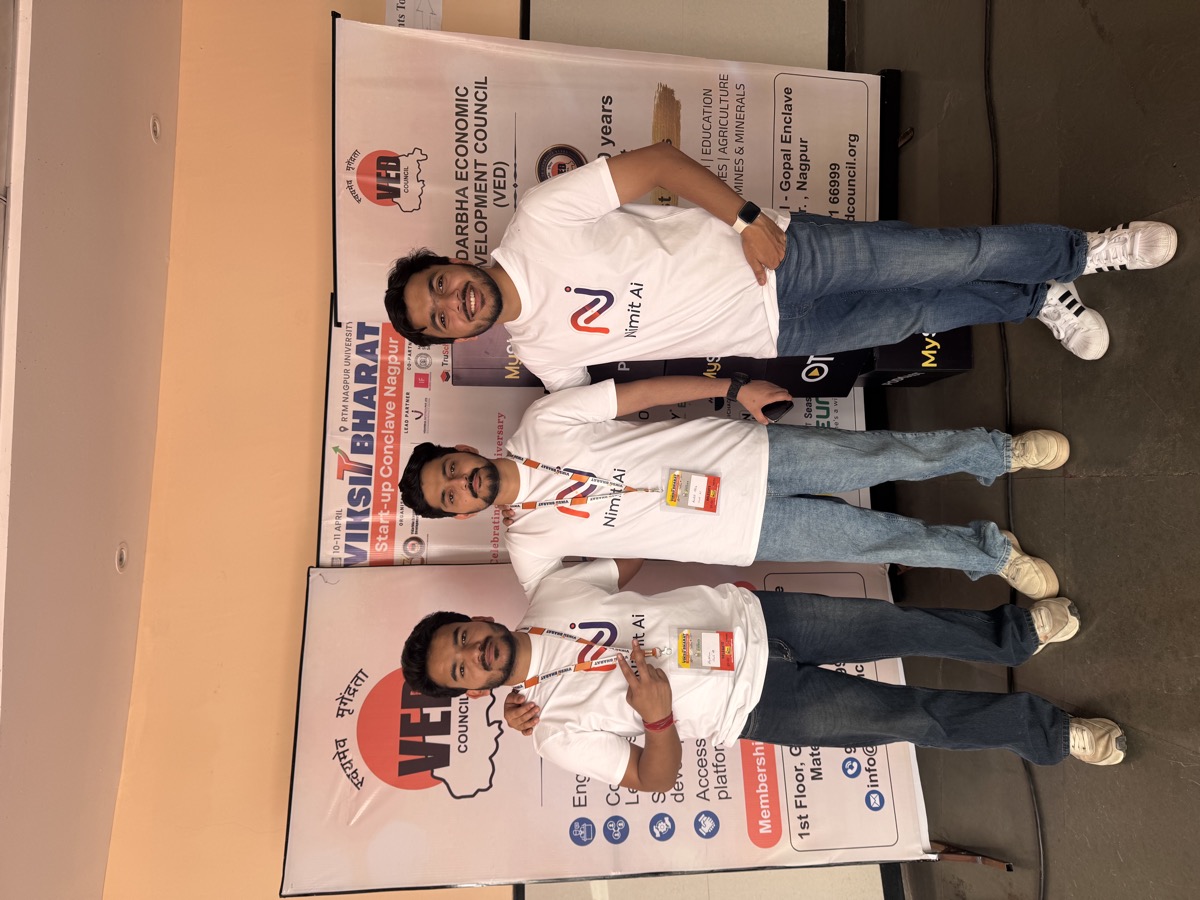
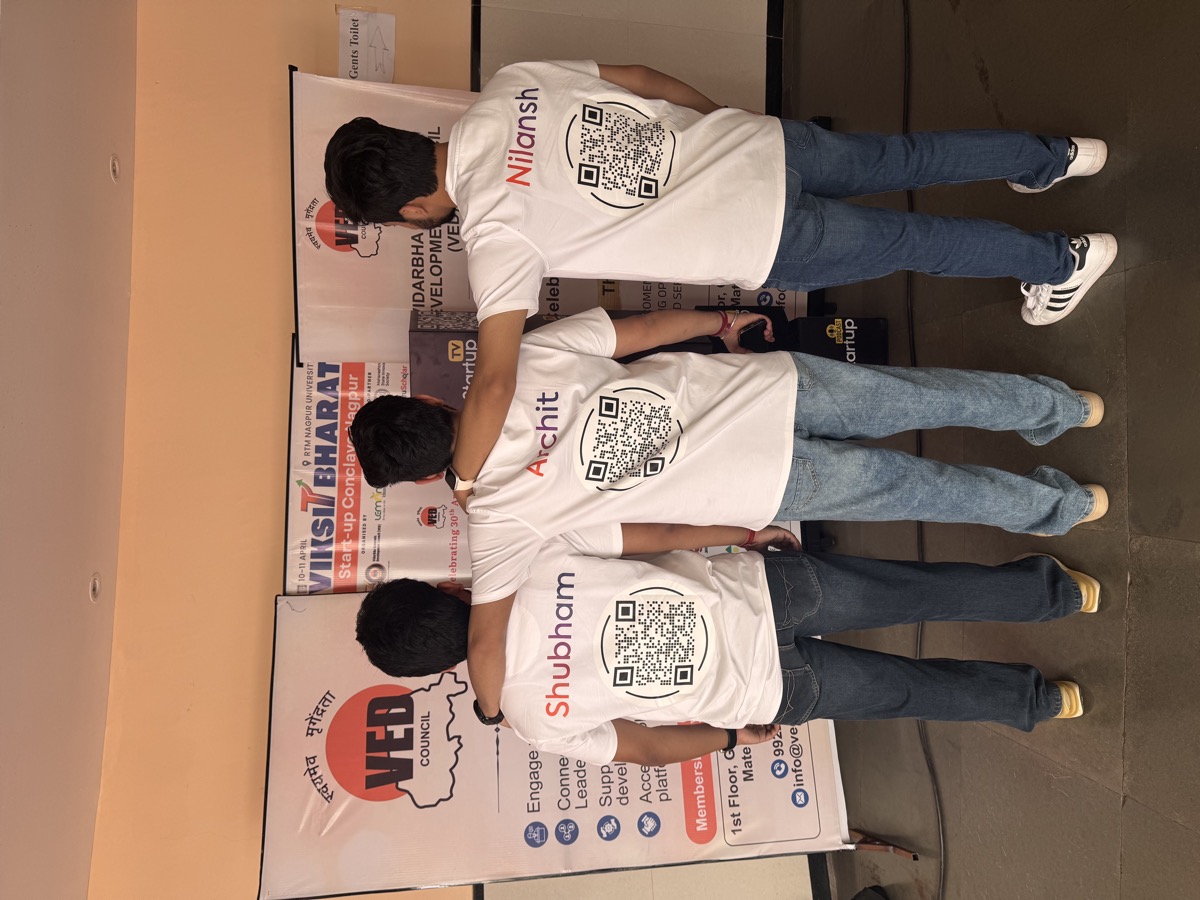
Nimitai was named in the Top 10 Innovations of India at Innopreneurs Season 12. This recognition was facilitated by Shri Pankaj Bhoyar, the Education Minister of Maharashtra, who was personally present at the Viksit Bharat Conclave at RTMNU Nagpur on April 10–11, 2026. Bhoyar's involvement — as a state minister engaged with a national program — is itself a signal of how seriously the Maharashtra government is taking the Viksit Bharat framework.

Nimitai is a B2B SaaS conversation intelligence tool. We record, transcribe, and analyze sales calls using AI — surfacing objection patterns, deal risk signals, and coaching insights for sales teams. It is, on the surface, a category-specific product for a specific segment of the B2B market. Not obviously the kind of company you'd expect on a Viksit Bharat innovation list.

But the inclusion reflects something important about what Viksit Bharat 2047 actually requires. A $35 trillion Indian economy is not built only with infrastructure and manufacturing. It requires Indian businesses — particularly B2B businesses — to sell more effectively, scale faster, and compete globally. Tools that help Indian sales teams close more deals, coach reps more systematically, and make better use of conversation data are infrastructure for the commercial layer of a Viksit Bharat economy. Revenue is the engine; conversation intelligence is one of the parts.

On our recognition

Being named in India's Top 10 Innovations at a Union Minister-backed program is meaningful to us not because it changes our product roadmap or our customer base. It changes our institutional identity. We are now part of a policy record that connects a B2B SaaS company to India's national development vision. That is a responsibility we take seriously.

We are also incubated at IIT Ropar Technology Business Incubator — another institutional anchor that places us in the Startup India framework. The combination of IIT Ropar TBI incubation and Innopreneurs Top 10 recognition creates a dual institutional backing that is unusual for a company at our stage.

The Policy Takeaways for Founders

Reducing what happened at Nagpur to practical lessons risks flattening something genuinely significant. But founders are, by definition, practitioners — and practitioners need frameworks they can act on. Here is what I think the Gadkari letter actually teaches.

01

Government recognition is now a legitimate E-E-A-T signal

Google's E-E-A-T (Experience, Expertise, Authoritativeness, Trustworthiness) framework applies to institutional credibility, not just content. For startups, a formal letter of appreciation from a Union Minister — or recognition at a government-backed Viksit Bharat Conclave — is an authoritativeness signal that functions downstream in media coverage, investor due diligence, and customer trust. This isn't vanity. It's institutional capital.

02

Accelerator selection matters more than it did three years ago

The Lemon Ideas / RTMNU / VED Council combination produced a political outcome that most metro accelerators have not. Founders evaluating accelerator programs should now ask: does this program have institutional roots that create political visibility? Does it connect to academic, industrial, and policy ecosystems simultaneously? Pedigree is less important than embeddedness.

03

Tier-2 cities are being taken seriously at the Union Minister level

If a Union Minister is appreciating startups in Nagpur — his own constituency, yes, but also a city not typically on the innovation map — the implicit signal is that the government's Viksit Bharat framework requires innovation to happen everywhere, not just in Bangalore and Mumbai. Founders building in tier-2 India should update their priors about the visibility and institutional support available to them.

04

The Viksit Bharat framework rewards cross-sector innovation

A conversation intelligence SaaS tool making a Viksit Bharat Top 10 list alongside what are presumably more 'India-problem-adjacent' ventures signals that the framework is genuinely broad. Founders building productivity tools, sales infrastructure, and B2B software should not assume their work is too category-specific to connect to national development narratives. Commercial-layer innovation is infrastructure.

People Who Shaped This Moment

Institutional recognition doesn't happen without people. The following individuals were central to what unfolded at RTMNU Nagpur in April 2026, and they deserve to be named clearly.

Deepak Menaria

Founder, Lemon Ideas

Deepak built the Innopreneurs program from a Nagpur-based entrepreneurship initiative into a nationally recognized startup pipeline. Getting a Union Minister to write a formal appreciation letter to your cohort does not happen by accident — it happens because of years of institutional relationship-building. That is Deepak's work.

Shri Pankaj Bhoyar

Education Minister, Maharashtra

Minister Bhoyar was personally present at the Viksit Bharat Conclave and facilitated the Top 10 Innovations recognition. His engagement represents the state government's alignment with the national Viksit Bharat framework — and signals that Maharashtra sees startup innovation as an education and skills priority, not just an economic development line item.

Shri Nitin Gadkari

Union Minister of Road Transport and Highways

Gadkari's appreciation letter elevated what could have been a well-run regional event into a nationally significant moment. His decision to formally recognize the Innopreneurs cohort — to name the program, invoke Viksit Bharat, and acknowledge the founders as contributors to the 2047 vision — is the act that gives this story its institutional weight.

Dr. Vishesh Kasliwal

Founder, Medysense Technologies (Judge)

A practitioner-turned-judge at Innopreneurs Season 12, Dr. Kasliwal brought the credibility of a founder who has built at the intersection of healthcare and technology. His evaluation of the cohort was substantive, not ceremonial. LinkedIn

Vilas Kale

Past President, Vidarbha Economic Development (VED) Council

Vilas Kale's VED Council involvement gave Innopreneurs its industrial backbone. The VED Council represents the established business community of Vidarbha — its endorsement of the program creates a bridge between new startup ventures and the region's existing commercial ecosystem. LinkedIn

Dr. Abhay Deshmukh

Director, Incubation Foundation

Dr. Deshmukh's engagement went deeper than the public event. His conversations with the Nimitai team were substantive — the kind of founder-to-mentor exchange that produces useful direction rather than generic encouragement. His perspective on incubation as an institutional function, not just a funding mechanism, informed how we think about our own growth trajectory.

Mukesh Ashar

Director, Lemon School of Entrepreneurship

The Lemon School of Entrepreneurship is the pedagogical anchor of the Lemon Ideas ecosystem. Mukesh Ashar's leadership of this institution ensures that Innopreneurs isn't just a pitch competition but is connected to a sustained educational program that trains the next generation of founders in the Vidarbha region.

Frequently Asked Questions

What is Viksit Bharat 2047?

Viksit Bharat 2047 is the Government of India's flagship initiative to transform India into a fully developed nation by 2047 — the centenary of independence. The program focuses on economic growth, infrastructure, innovation, and self-reliance across sectors. Startups, technology, and domestic innovation are explicitly identified as contributors to the vision. The government has set a target of a $35 trillion economy by 2047, which requires sustained innovation-led growth from sectors including technology, manufacturing, and services.

What did Nitin Gadkari's letter to Lemon Ideas founders say?

Union Minister Nitin Gadkari's letter appreciated the startups of Lemon Ideas Innopreneurs Season 12 for their contribution to India's innovation ecosystem. He specifically named the Innopreneurs program, referenced the Viksit Bharat 2047 vision, and acknowledged the role of startup founders in India's developmental goals for the centenary of independence. This was not a generic congratulatory letter — it named the program directly and connected startup innovation with the national Viksit Bharat policy framework.

Who is Nitin Gadkari and why does his appreciation matter?

Nitin Gadkari is the Union Minister of Road Transport and Highways, Government of India, and one of India's most respected political leaders from Nagpur, Maharashtra. He is the architect of India's modern expressway network — including the Samruddhi Expressway and the expansion of national highways from 91,000 km to over 1,46,000 km — and has been a consistent proponent of EV policy and MSME support. His endorsement of a startup cohort is meaningful because he is a hands-on minister with direct influence over economic policy. When Gadkari names a startup program in an official letter, the signal is substantive.

What is Innopreneurs Season 12?

Innopreneurs Season 12 is the 12th edition of the Innopreneurs startup program by Lemon Ideas, held at Rashtrasant Tukadoji Maharaj Nagpur University (RTMNU) in Nagpur, Maharashtra, in April 2026. It culminated in the Viksit Bharat Conclave on April 10–11, 2026, where startups pitched and were evaluated by industry leaders and policymakers. The program selected a Top 10 Innovations of India from the cohort, of which Nimitai was one.

What role does Lemon Ideas play in the Viksit Bharat initiative?

Lemon Ideas is an accelerator and entrepreneurship program based in Nagpur that has built its Innopreneurs program into a recognized pipeline for startup innovation. By hosting Innopreneurs Season 12 as part of the Viksit Bharat Conclave at RTMNU — and receiving formal recognition from Union Minister Nitin Gadkari — Lemon Ideas has positioned itself as an institutional bridge between India's startup ecosystem and the government's Viksit Bharat 2047 vision. It operates alongside the VED Council and RTMNU to create a full academic-political-entrepreneurial triangle.

Why was Nagpur chosen for the Viksit Bharat Conclave?

Nagpur was chosen for the Viksit Bharat Conclave for multiple converging reasons: it is Nitin Gadkari's home constituency, it is the geographic center of India (known as the "Zero Mile City"), and it is home to RTMNU — a 103-year-old university with strong industrial ties through the VED Council. Nagpur represents the Viksit Bharat thesis in built form: a tier-2 city with ambitions to compete with larger innovation hubs, backed by infrastructure investment (Samruddhi Expressway, MIHAN, international airport) and a growing startup ecosystem.

See what Nimitai does — in 20 minutes

We are one of India's Top 10 Innovations at Innopreneurs Season 12, incubated at IIT Ropar TBI. We build AI conversation intelligence for B2B sales teams. Let's show you the product on a real call.

Book a Call

India is building something significant. The Viksit Bharat 2047 vision is ambitious enough to require every layer of the economy to contribute — infrastructure, manufacturing, services, and yes, the software tools that make commercial activity more efficient and scalable.

What happened in Nagpur in April 2026 was a demonstration that government policy and startup innovation can align at the city level, in a tier-2 ecosystem, with institutional backing that rivals anything available in the metros. Gadkari's letter is a data point. The Innopreneurs cohort is a data point. Our recognition is a data point.

The pattern they point to is the one worth watching.

Written by

A

Archit Dhir

Co-founder & CTO, Nimitai

Archit leads product and engineering at Nimitai. He co-founded Digitalpatron.in and has spent years building AI-powered tools for B2B sales teams. He led the technical pitch at Innopreneurs Season 12 Top 10 at Viksit Bharat Conclave Nagpur 2026.

Book a 20-minute demo

See Nimitai in a live sales call — no slides, no pitch deck, just real-time intelligence on a real conversation.

Book a Call
Found this useful?
Beta live · 500+ on waitlist

Get real-time intelligence on every sales call

Nimitai surfaces buyer intent signals, coaches your reps through objections, and generates follow-ups — all during the live conversation. from $149/seat/month, founding price locked for life.